
Pakistan calls on OIC states to turn commitments into action for women’s empowerment
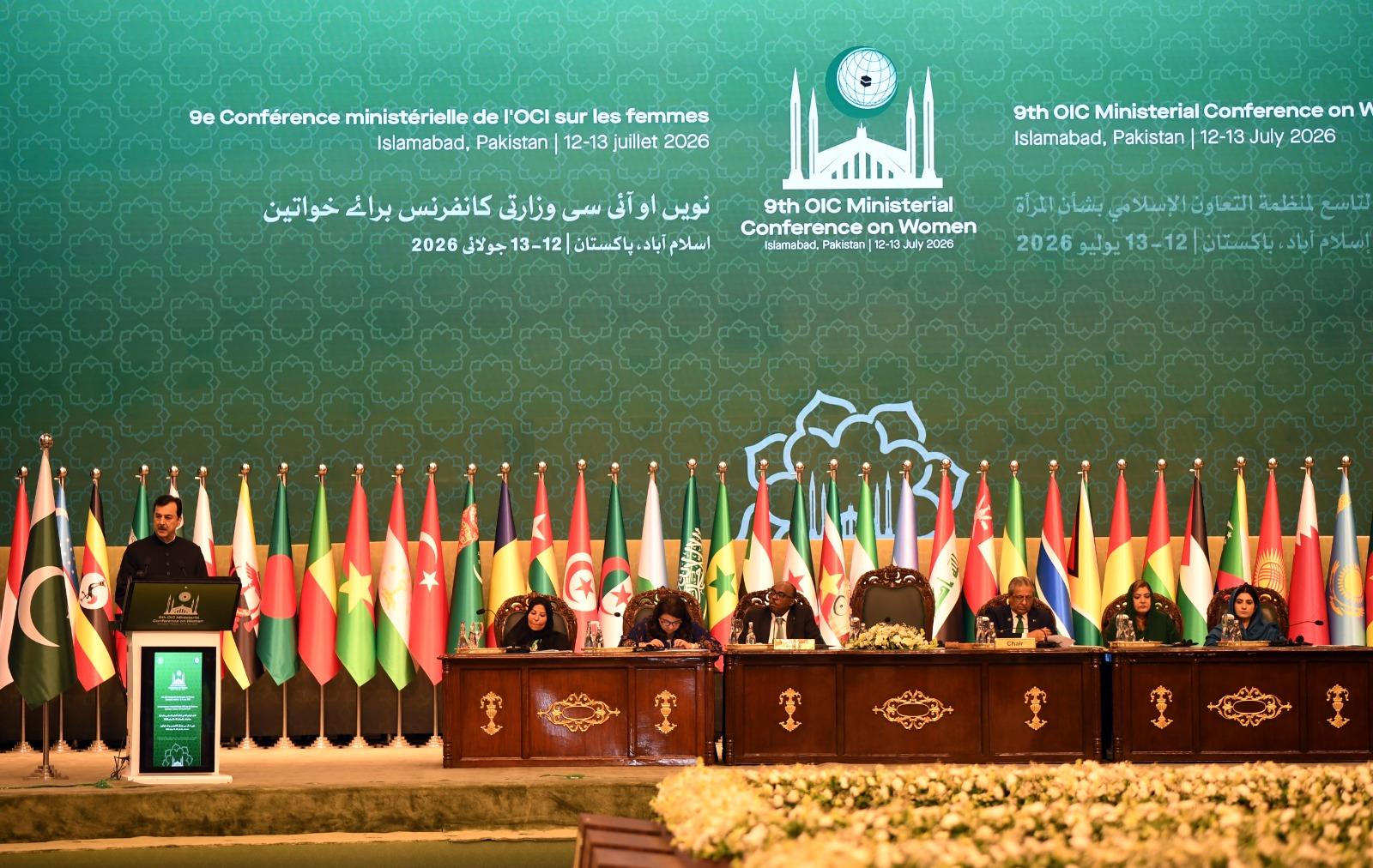
Islamabad, July 13: Pakistan assumed the chairmanship of the 9th Ministerial Conference on Women of the Organization of Islamic Cooperation (OIC), with Chairman Senate Syed Yousaf Raza Gilani urging member states to move beyond declarations and take practical steps to ensure the socio-economic and political empowerment of women across the Muslim world.
Addressing the opening session as chief guest, Gilani said empowering women is not only an Islamic obligation but also a key requirement for sustainable development and inclusive economic growth. He stressed that Islam granted women rights to education, inheritance, property ownership, economic participation, and dignity more than 1,400 years ago, adding that the teachings of the Holy Quran and the Holy Prophet Muhammad (Peace Be Upon Him) continue to provide a comprehensive framework for ensuring women’s meaningful role in society.
Welcoming ministers, parliamentarians, and delegates from OIC member states, Gilani noted that women represent nearly half of the population of OIC countries, making their inclusion in decision-making and economic activities essential for national progress. He paid tribute to the achievements of Muslim women in governance, diplomacy, science, education, business, and public service, while remembering Shaheed Mohtarma Benazir Bhutto as the first woman Prime Minister of Pakistan and the Muslim world whose leadership remains an inspiration.
Highlighting Pakistan’s initiatives, Gilani referred to the Benazir Income Support Programme (BISP), Waseela-e-Taleem, women-led entrepreneurship schemes, financial inclusion measures, digital literacy, and e-commerce initiatives aimed at expanding opportunities for women.
Federal Minister for Law, Justice and Human Rights Azam Nazeer Tarar, after formally assuming the conference chairmanship, reaffirmed Pakistan’s commitment to serving all 57 OIC member states through partnership, inclusivity, and consensus. Referring to the conference theme, “Socio-Economic and Political Empowerment of Women in the OIC Countries: Challenges and Way Forward,” he said women’s empowerment is not merely a social responsibility but an economic necessity, a governance priority, and a cornerstone of sustainable development.
Assistant Secretary General for Humanitarian, Cultural and Social Affairs at the OIC, Ambassador Dr. Tarig Ali Bakheet, said the conference demonstrated the organisation’s continued commitment to advancing women’s rights and strengthening their role in the development and prosperity of the Islamic world. He commended Pakistan and Egypt for successfully hosting successive ministerial conferences on women.
Executive Director of the Women’s Development Organization (WDO), Sarah Al Shoura, highlighted ongoing efforts to enhance cooperation among member states and promote policies that expand women’s participation in education, economic development, and leadership. Meanwhile, President of the Women’s Consultative Council of the 8th OIC Ministerial Conference on Women, Ambassador Naela Gabr, called for sustained collaboration and greater investment in women’s education, economic empowerment, and leadership to ensure inclusive and long-term development across OIC member states.