
Atif Ikram Sheikh Proposes Pakistan–Türkiye Business Summit to Boost Bilateral Trade
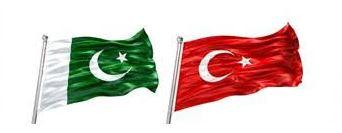
Islamabad, July 9: President of the Economic Cooperation Organization Chamber of Commerce and Industry (ECO CCI) and the Federation of Pakistan Chambers of Commerce and Industry (FPCCI), Atif Ikram Sheikh, has proposed holding a Pakistan–Türkiye Joint Business Meeting to strengthen trade and investment cooperation between the two countries.
The proposal has been formally shared with the Union of Chambers and Commodity Exchanges of Türkiye (TOBB) as a follow-up to the recent meeting between Prime Minister Shehbaz Sharif and Turkish President Recep Tayyip Erdoğan in Istanbul, where both leaders agreed to increase bilateral trade to US$5 billion.
Atif Ikram Sheikh said the leadership of Pakistan and Türkiye has set a clear roadmap for expanding economic relations, adding that the private sectors of both countries must now translate this vision into practical outcomes through stronger business-to-business engagement, investment partnerships, and institutional collaboration.
He noted that despite the longstanding brotherly ties between Pakistan and Türkiye, bilateral trade remains well below its potential. In 2025, Pakistan exported goods worth US$369.2 million to Türkiye, while imports from Türkiye reached US$866.5 million, bringing total bilateral trade to US$1.236 billion. The FPCCI president said Pakistan’s key exports to Türkiye include rice, textiles, garments, leather products, sports goods, surgical instruments, carpets, and agricultural commodities.
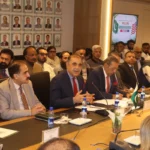
He added that the proposed business meeting would bring together leading entrepreneurs, exporters, investors, and industry representatives to explore joint ventures, strengthen supply chains, and promote investment in priority sectors. He also highlighted that both countries cooperate closely through the ECO, the Islamic Chamber of Commerce and Development (ICCD), the D-8 Chamber of Commerce and Industry, and the Confederation of Asia-Pacific Chambers of Commerce and Industry (CACCI), providing a strong institutional framework for deeper economic integration.