

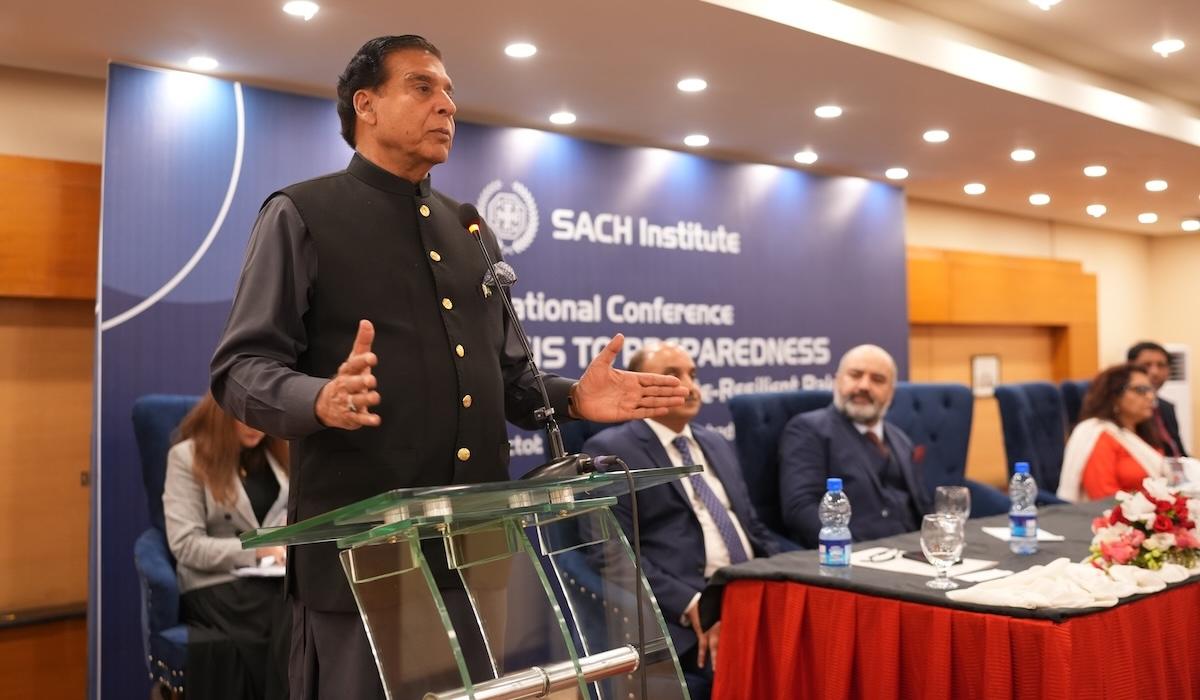
SACH Institute Hosts National Conference on Post-Flood Strategies for a Climate-Resilient Pakistan
Former PM Raja Pervaiz Ashraf, experts and policymakers stress need for proactive climate and disaster preparedness
Islamabad | October 21, 2025 — The Sufism, Arts, Culture, and Heritage (SACH) Institute organized a high-profile National Conference titled “From Crisis to Preparedness: Post-Flood Strategies for a Climate-Resilient Pakistan” at the Islamabad Club, gathering leading national experts, policymakers, diplomats, scholars, and practitioners to chart a way forward for Pakistan’s climate resilience and disaster preparedness.
The conference focused on strengthening institutional synergy, adopting preventive approaches, and integrating gender-inclusive strategies in post-flood recovery and resilience planning.
Opening Session: Understanding the Deluge
In the opening session, themed “Understanding the Deluge: Climate Change, Floods, and Pakistan’s Preparedness,” former Chairman of the National Disaster Management Authority (NDMA), Major General (R) Aasghar Nawaz, delivered the keynote address. He emphasized the urgent need to shift from reactive disaster management to preventive frameworks through institutional coordination and early preparedness.
Major General (R) Dr. Muhammad Samrez Salik, former Director General of the Institute for Strategic Studies and Research Analysis (ISSRA) at the National Defence University (NDU), highlighted the national security implications of climate change and its cascading socio-economic impacts. Ms. Nilofar Bakhtiar, former Federal Minister, underscored the importance of gender inclusion and community engagement in climate adaptation policies.
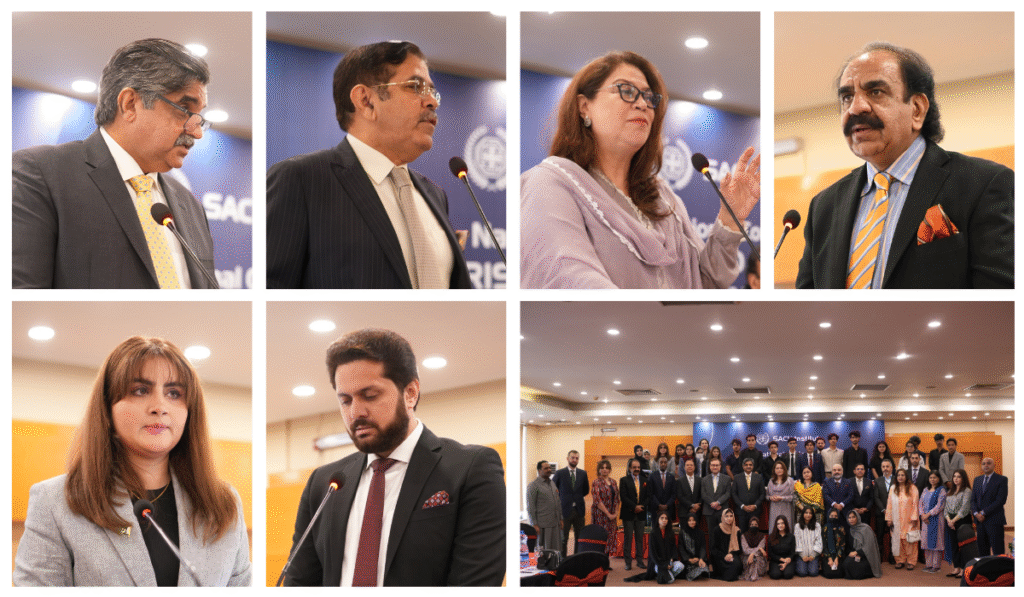
Second Session: From Crisis to Preparedness
The second session, “From Crisis to Preparedness: Health, Infrastructure, and Communication in Post-Flood Strategy,” was moderated by Dr. Talat Shabbir, Director of the China-Pakistan Study Centre (CPSC) at the Institute of Strategic Studies Islamabad (ISSI).
The discussion featured Lieutenant General (R) Umar Mehmood Hayat, former Chairman NDMA; Malik Amin Aslam, former Minister of State for Climate Change and Environmental Coordination; Dr. Baseer Khan Achakzai, former Director General Health at the Ministry of National Health Services; and Dr. Rasheed Ahmed, Humanitarian Programme Analyst at the United Nations Population Fund (UNFPA).
The panelists collectively emphasized the need for multi-sectoral collaboration, stronger communication systems, and greater investment in public health and infrastructure to strengthen post-flood recovery and community resilience.
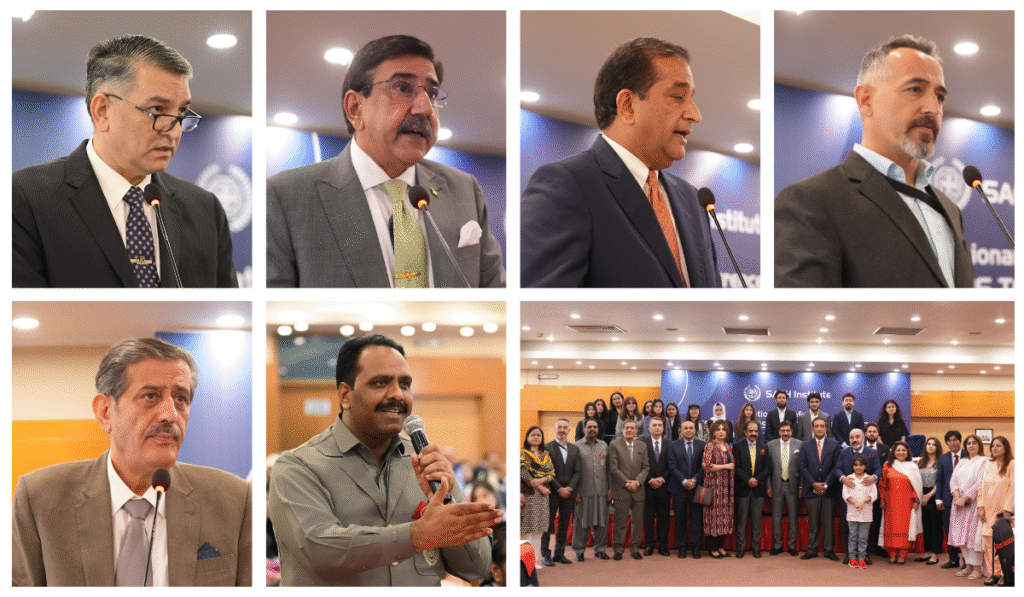
Closing Session: Building a Climate-Resilient Future
In the closing session, “Building a Climate-Resilient Future: Policies, Investments, and Collaborative Roadmaps,” Mr. Raja Pervaiz Ashraf, former Prime Minister of Pakistan and Speaker of the National Assembly, attended as the Chief Guest. He lauded the initiative of the SACH Institute in bringing together national experts on such a critical issue, saying that “policy-based collaboration and long-term investment are key to Pakistan’s climate resilience and sustainable future.”
Other speakers included Zaheer Ahmad Babar, Chief Meteorologist at the Flood Forecasting Division of the Pakistan Meteorological Department; M. Tanveer Piracha, S.I. (M), Executive Director of the National Institute of Disaster Management (NIDM) at NDMA; and Ms. Raheela Zahid, a project management and gender-inclusive disaster management expert from the Office of the Auditor General of Pakistan.
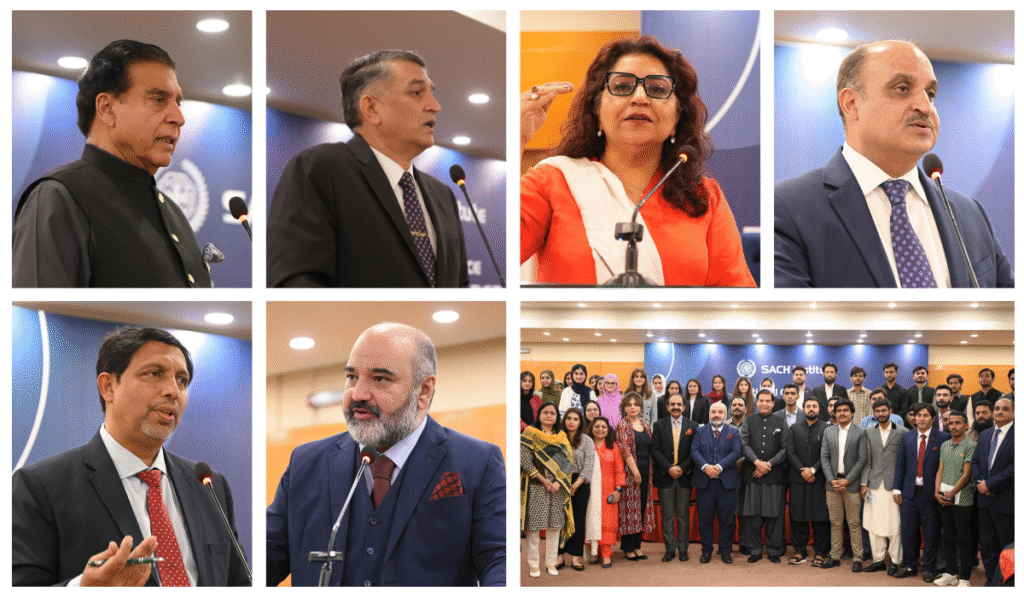
Vote of Thanks
Delivering the vote of thanks, Peer Syed Mudassir Shah, Founder and President of SACH Institute, reaffirmed that the Institute’s role is to provide research-driven, knowledge-based policy support. “SACH is a policy-oriented think tank, not a relief organization,” he said, stressing that “climate resilience must be treated as a national priority, rooted in collaboration, foresight, and institutional commitment.”